Understanding the Growing Interest in Home Battery Systems
Solar energy adoption in Queensland has grown rapidly over the past decade, particularly in Brisbane and surrounding regions where high sunshine hours make rooftop solar highly effective. As electricity prices continue to fluctuate and feed-in tariffs decline, many homeowners are now looking for ways to store their own solar energy rather than exporting it back to the grid. This shift has placed home battery systems at the centre of household energy discussions.
Solar battery rebates in Queensland have become an important topic because they directly influence the affordability of installing these systems. A battery system allows homeowners to store excess solar energy generated during the day and use it later in the evening when electricity demand is typically higher and grid power is more expensive. However, the upfront cost of batteries has historically been a major barrier. Government incentives and rebates are designed to reduce this barrier and accelerate adoption.
In 2026, interest in these rebates is particularly strong due to ongoing changes in federal energy policy, rising household electricity costs, and increased awareness of energy independence.
What Solar Battery Rebates Actually Are
Solar battery rebates refer to financial incentives provided to reduce the upfront cost of installing a home battery system. These incentives may come from federal programs, state initiatives, or occasionally through local energy retailers and network support schemes.
In Australia, battery rebates are generally structured as either upfront discounts or post-installation incentives that reduce the effective purchase and installation cost. The intention behind these programs is to encourage more households to adopt battery storage, which helps stabilise the electricity grid by reducing peak demand.
Unlike solar panel rebates, which have been widely available for many years through renewable energy certificate schemes, battery rebates are a newer policy area. As a result, they tend to evolve more frequently and are subject to government funding availability and policy adjustments.
Queensland itself has historically focused more on solar panel uptake than battery storage, meaning most battery incentives affecting Brisbane households are driven at the federal level rather than state-based programs.
How Battery Rebates Work in Queensland
In Queensland, most homeowners accessing a rebate for a solar battery do so through a federal incentive structure rather than a standalone state subsidy. These programs typically reduce the upfront installation cost by applying a discount based on the usable capacity of the battery system.
The rebate is usually calculated at the point of installation, meaning the installer applies the discount directly to the customer’s invoice. This makes the process simpler for homeowners because they do not need to apply separately for reimbursement after the system is installed.
Eligibility conditions often include requirements such as:
- The system must be installed by a certified and accredited installer
- The battery must meet Australian safety and performance standards
- The system must be connected to a compliant rooftop solar installation
- The installation must be on an eligible residential property
Because policies can change, the exact structure of rebates may vary from year to year. However, the general principle remains consistent: reduce the upfront cost to encourage more widespread adoption of battery storage systems.
Who Is Eligible for Solar Battery Rebates
Eligibility for solar battery rebates in Queensland generally depends on several key factors rather than income or household type. Most residential property owners with an existing solar system are potential candidates for battery installation incentives.
Key eligibility considerations typically include:
- Ownership of the property where the battery will be installed
- Presence of an existing solar photovoltaic system or planned installation
- Compliance with electrical safety standards and network requirements
- Installation by a licensed electrician with appropriate accreditation
Some programs may prioritise or provide greater benefits to households with higher energy usage or those located in areas where grid congestion is a concern. However, eligibility is generally broad, with the main focus being safe installation and compliance rather than restrictive household criteria.
Costs, Savings, and Financial Considerations
The cost of installing a home battery in Brisbane can vary significantly depending on system size, brand, and installation complexity. While prices have gradually decreased over time due to technological improvements and increased competition, batteries remain a significant household investment.
The financial benefit of a battery system depends on several factors:
- How much solar energy your household generates
- How much energy you consume in the evening
- Electricity usage patterns throughout the day
- Feed-in tariff rates offered by energy retailers
- Size and efficiency of the battery system
A properly sized battery allows homeowners to reduce reliance on grid electricity during peak pricing periods. Over time, this can result in meaningful savings on electricity bills. However, the payback period varies widely depending on usage habits and system configuration.
It is important to note that while rebates reduce upfront costs, they do not guarantee immediate financial return. Batteries are often best viewed as a long-term energy management solution rather than a short-term cost-saving measure.
Is a Solar Battery Worth It in Brisbane?
Brisbane is one of the most favourable locations in Australia for solar energy production due to its high number of sunny days per year. This makes battery systems particularly appealing because excess daytime energy generation is common.
However, whether a battery is worth it depends on household-specific circumstances. Homes with high evening energy usage, electric vehicles, or large families tend to benefit more from battery storage. In contrast, households with low evening consumption may see a longer return on investment period.
Another key factor is the declining value of feed-in tariffs. As energy retailers reduce the rate paid for exported solar power, storing and using your own energy becomes more financially attractive. This trend is one of the primary drivers behind increased battery adoption in Queensland.
Installation and Electrical Considerations
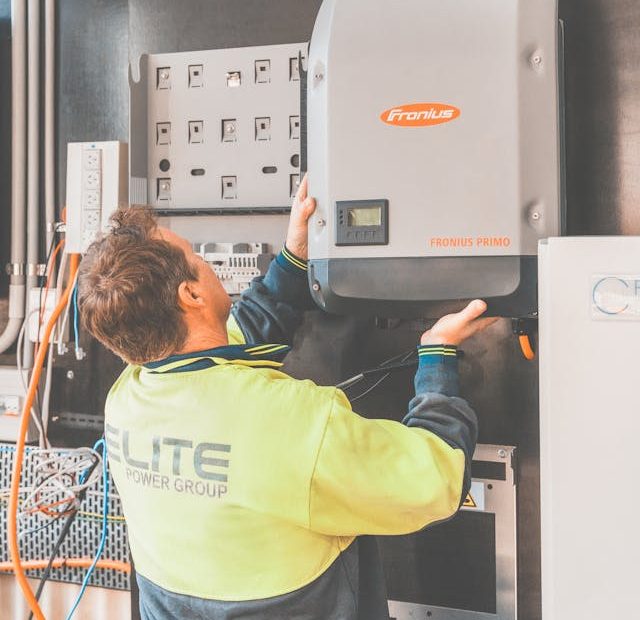
From an electrical perspective, battery installation is more complex than solar panel installation alone. It requires careful integration with the home’s switchboard, solar inverter, and grid connection system.
A licensed electrician must ensure:
- The switchboard can handle additional load requirements
- The system complies with Australian electrical safety standards
- Proper isolation and protection systems are installed
- The battery is positioned in a safe, ventilated location
- The system is correctly configured for grid interaction
In older Brisbane homes, switchboard upgrades are sometimes required before a battery can be installed safely. This is especially common in properties that were not originally designed for modern electrical loads such as air conditioning, electric vehicle charging, and high-capacity solar systems.
Common Misconceptions About Battery Rebates
There are several misconceptions surrounding solar battery rebates in Queensland. One common misunderstanding is that rebates cover the entire cost of installation. In reality, rebates typically reduce the cost but do not eliminate it entirely.
Another misconception is that batteries will always guarantee electricity bill elimination. While batteries can significantly reduce grid reliance, complete independence is rare unless the system is oversized relative to household demand.
Some homeowners also believe that all batteries are eligible for rebates, when in fact only approved systems meeting specific standards qualify under incentive programs.
The Future of Solar Batteries in Queensland
The future of solar battery adoption in Queensland looks strong, driven by continued improvements in battery technology, increasing electricity demand, and ongoing policy support for renewable energy.
As more households adopt electric vehicles and electrify heating and cooking systems, demand for stored solar energy is expected to increase. This will likely make batteries even more relevant in the coming years.
Government incentives are expected to continue evolving as energy policy adapts to grid stability challenges and renewable energy targets. While exact future rebate structures are not fixed, the overall direction is toward greater support for household energy storage systems.
Talk to Safe1Electrical Today
Solar battery rebates in Queensland play an important role in making home energy storage more accessible to homeowners in Brisbane and surrounding regions. While rebates help reduce upfront costs, the decision to install a battery should be based on long-term energy usage patterns, financial expectations, and household requirements.
As electricity prices continue to change and solar adoption increases, battery systems are likely to become an increasingly common feature in Queensland homes.